


From first conversation to working software.

No strategy decks. No multi-year roadmaps. Latch captures how your team actually works, builds a precise process model, and deploys custom software — in weeks, not quarters.

Observation first. Automation second.

Roughly 95% of enterprise GenAI pilots produce no measurable P&L impact. The reason isn't model quality. It's that agents need a precise description of the workflow they're meant to execute, and most companies don't have one. The agent is asked to automate something nobody can fully describe, so it fails — predictably and expensively.

Latch fixes the prerequisite. We capture how work actually happens, convert it into a structured format an AI can execute, and only then build the automation.

Most AI projects fail at the same step, and it's not the AI step.

STEP 1

Observe the
real work

Your team installs the Latch desktop recorder and captures workflows as they actually happen — screen activity, audio narration, and system-level interaction logs collected simultaneously. No interviews. No process documentation exercises. Just your team doing their jobs.

Within days, our AI translates those recordings into structured process models that reflect how work truly operates — not how anyone thinks it does.

STEP 2

Model and simulate

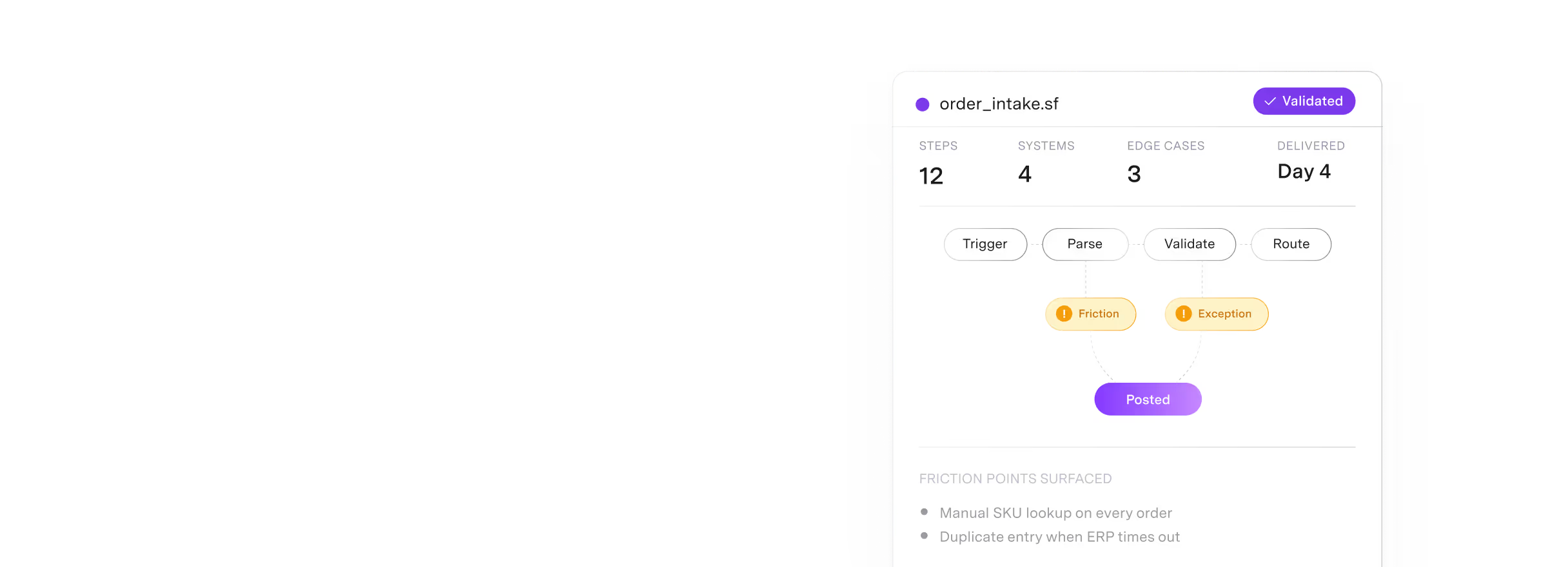
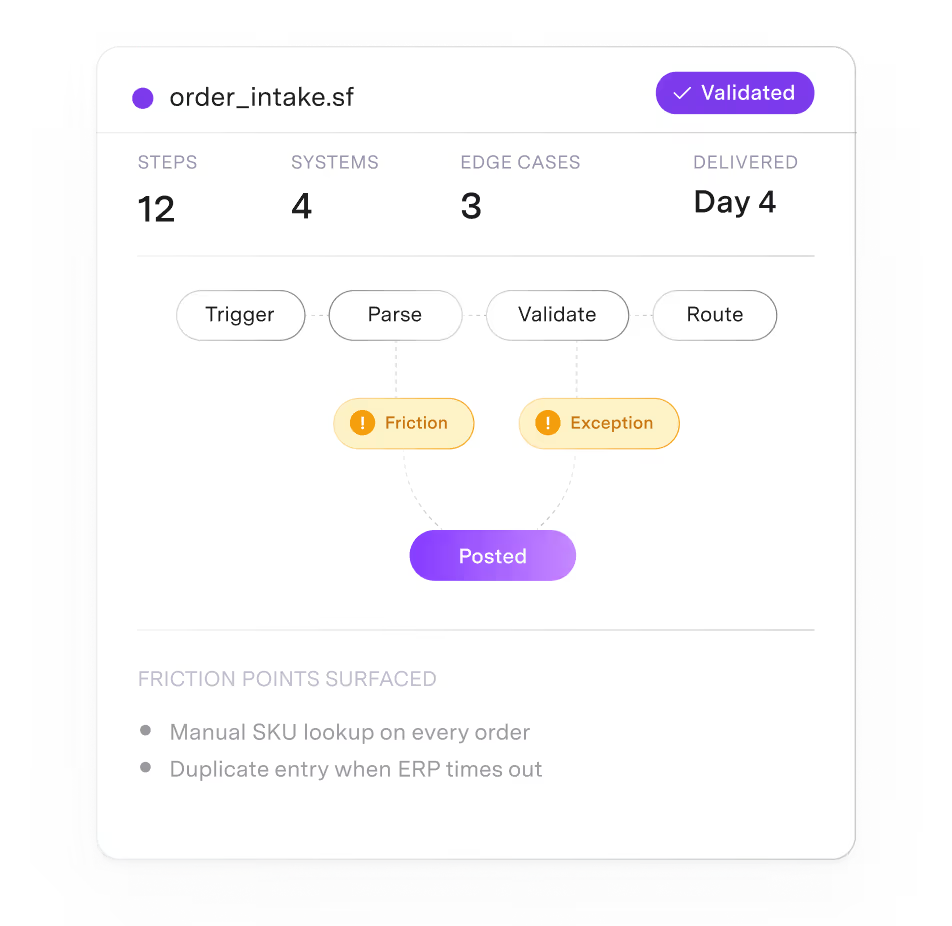
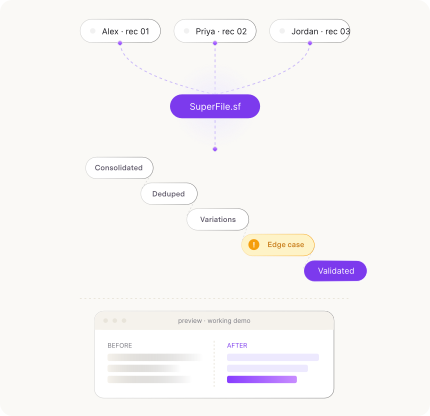
We consolidate recordings across multiple team members and scenarios to build a high-fidelity Latch Session — a machine-readable representation of the workflow. Where one person's process differs from another's, we surface the variation, exposing edge cases and shortcuts no single person could fully describe.

Before anything is built, we generate a working demo of the proposed automation. You see exactly what changes, what stays the same, and where human judgment remains essential.

STEP 3

Deploy a purpose-built application

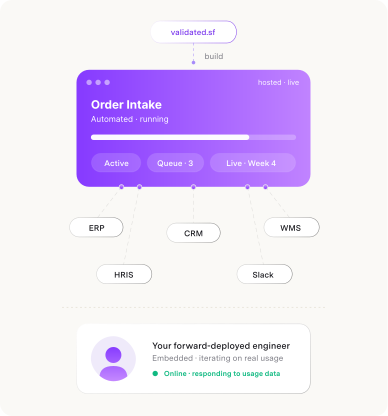
A forward-deployed Latch engineer builds and launches your solution directly on our hosted platform. We integrate with your existing systems — ERP, CRM, WMS, HRIS — without touching core architecture.

Your team goes from waiting on someone to pull a spreadsheet to having a working application that handles it automatically. Live in weeks. Iterating based on real usage.

STEP 4

Measure. Expand. Compound.

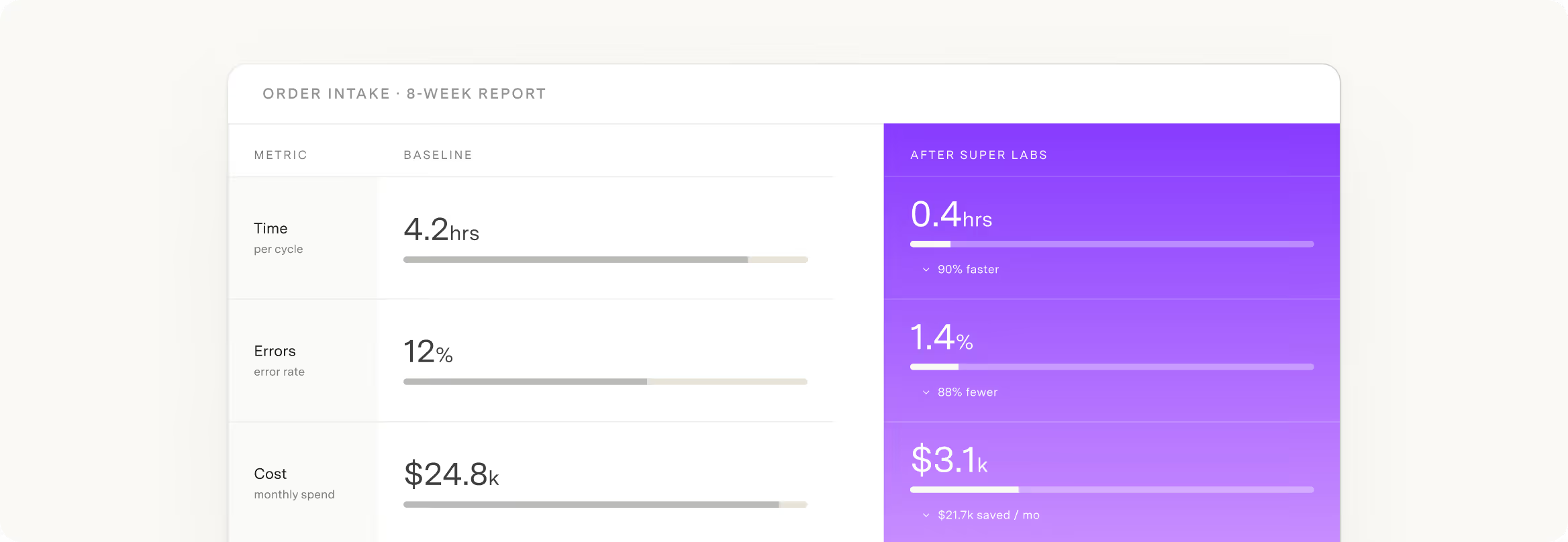
Once the first workflow is live, we document exactly what changed — time saved, errors eliminated, cycle time reduced. Then we identify the next highest-leverage process, using the recorder as an ongoing discovery engine.

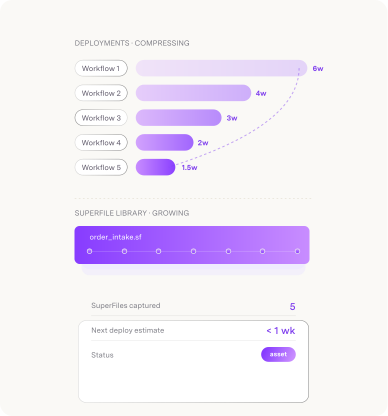
Each deployment makes the next one faster. Your team's recordings build an operational knowledge base that becomes its own strategic asset — a structured representation of how your company actually runs.

Less than you think.
More valuable than you'd expect.

STEP 1

Two to three willing recorders

We need two or three people who perform the target workflow regularly. They install the desktop recorder, hit record at the start of their task, and go about their work normally. No preparation required. The recorder does the capturing — they just do their jobs.

STEP 2

Access to the Right context

A short kickoff conversation to understand the workflow's business purpose — what triggers it, what a successful outcome looks like, and which systems are involved. No documentation needed. Forty-five minutes of your time, and we have everything we need to start.

STEP 3

Honest feedback on the demo

Before we build anything, you see a working simulation of the proposed solution. We need your team to engage with it critically — flag what's wrong, identify missing edge cases, confirm what's right. This is the moment that prevents expensive corrections downstream.

No slide decks.
No handoffs. No guessing.

A validated Latch Session within days of recording
Within days of your team's first recordings, you receive a structured, formally consistent process model — not a rough flowchart, but a logically complete representation of how the workflow actually operates, including identified edge cases and friction points.
A working demo before a single line of code is written
Before we build your application, you see it working. We simulate the proposed automation against your validated Latch Session so you can confirm the logic, approve the exception handling, and sign off on exactly what gets built — with no surprises.
A dedicated engineer who stays embedded
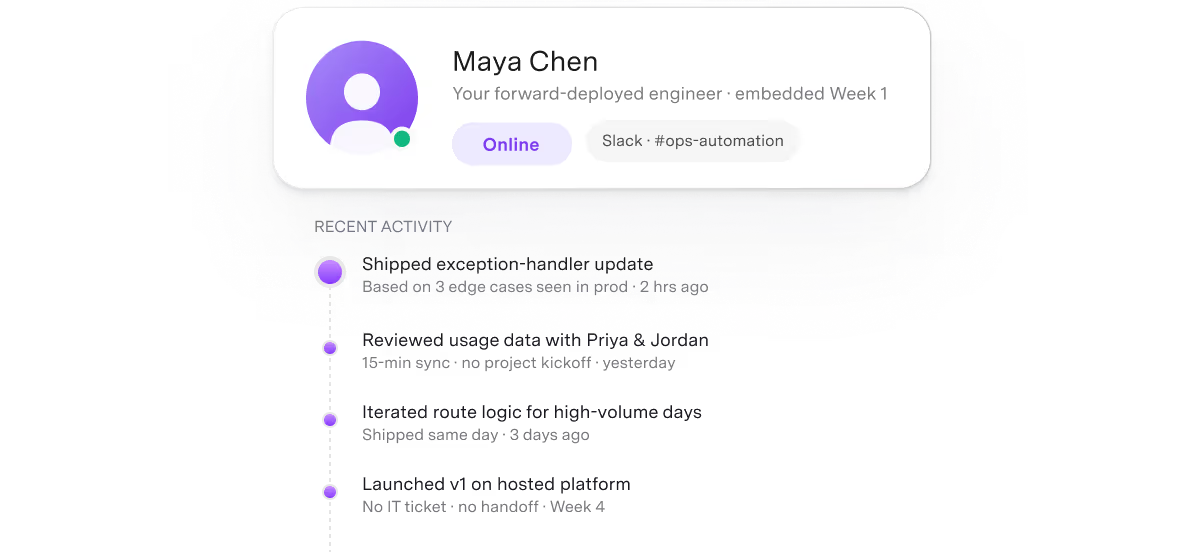
Your forward-deployed Latch engineer doesn't hand off a ticket and disappear. They build the solution, launch it on our hosted platform, and continue iterating based on real usage data. No internal IT overhead. No implementation project management required from your side

The engineer who shows up like they work there.

Forward-Deployed Engineering

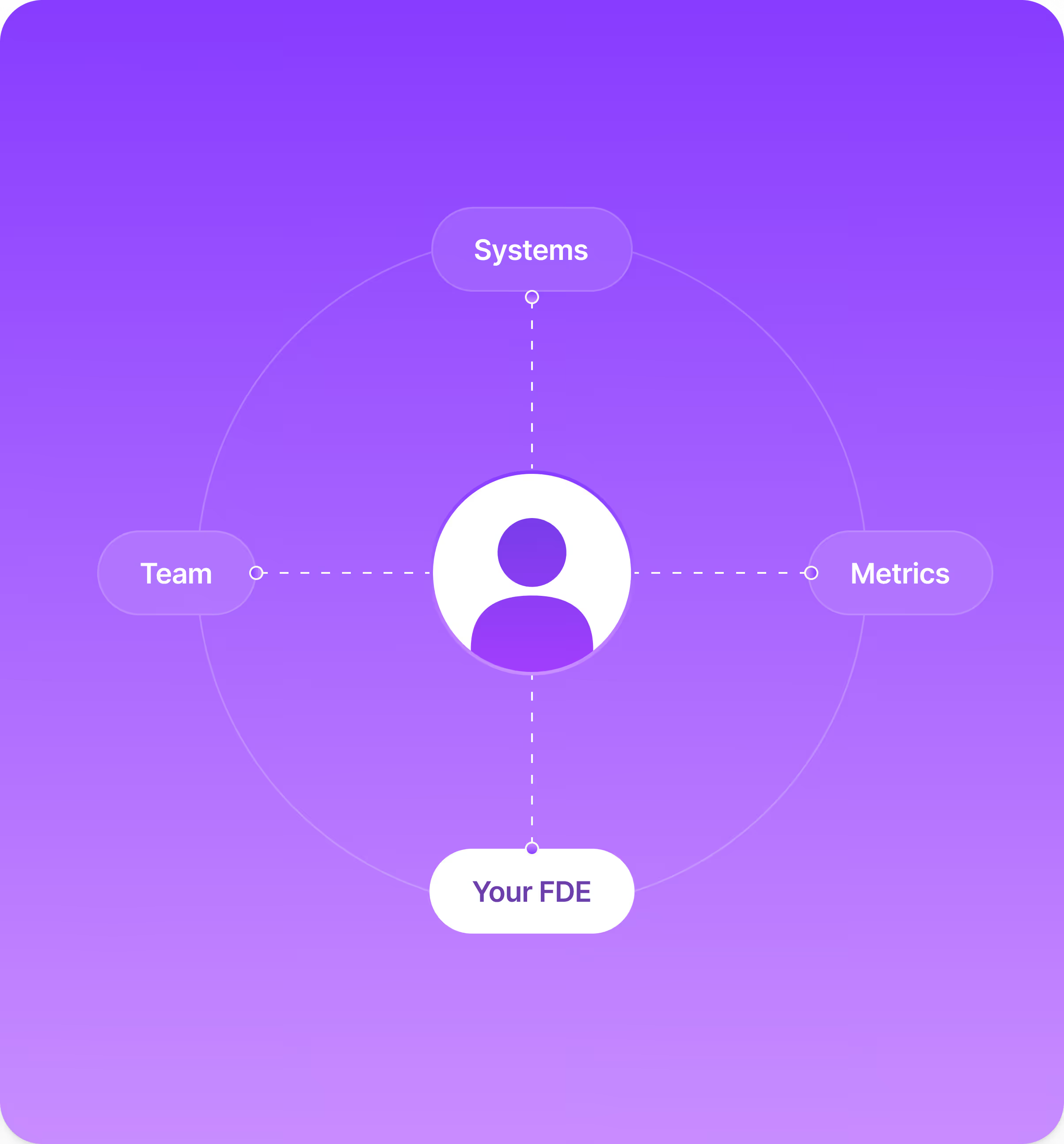
Most software implementations end with a handoff — a delivery, a training session, and then a support ticket queue. Latch works differently. Your dedicated forward-deployed engineer is embedded in your workflow from day one of deployment.


They understand your specific process, your edge cases, your team's habits. When something needs to change, it changes — without a project kickoff, a requirements doc, or a sprint cycle.

This isn't a managed service. It's an engineer who treats your operations as their problem to solve.

Weeks, not quarters.

WEEK 1

Discovery & Recording

Kickoff conversation. Recorders installed. Your team captures 5–10 instances of the target workflow during normal work.

WEEK 2

Session Generation

Recordings synthesized into a structured Latch Session. Edge cases surfaced. You review and validate the model before anything is built.

WEEKS 3–4

Demo & Build

Working simulation delivered for sign-off. Forward-deployed engineer builds the application against the validated Latch Session.

WEEK 5+

Live & Iterating

Application running in production. Performance baseline documented. Engineer continues iterating based on real usage. Next workflow scoped.

Documented improvement, not projected savings.

We measure before we build.

Every engagement begins with a baseline: time spent on the workflow, cycle duration, error rates, headcount allocated. We don't project ROI from a slide. We document it from the system.

Once the application is live, we compare against the original baseline and report the delta — what changed, what it saved, and what the next highest-leverage workflow is.

Common questions

Everything we get asked in discovery calls.

Still deciding?

Book a 30-minute discovery call and we'll tell

you honestly which tier fits your team.